USCIS Request for Evidence (RFE): What It Means and How to Respond

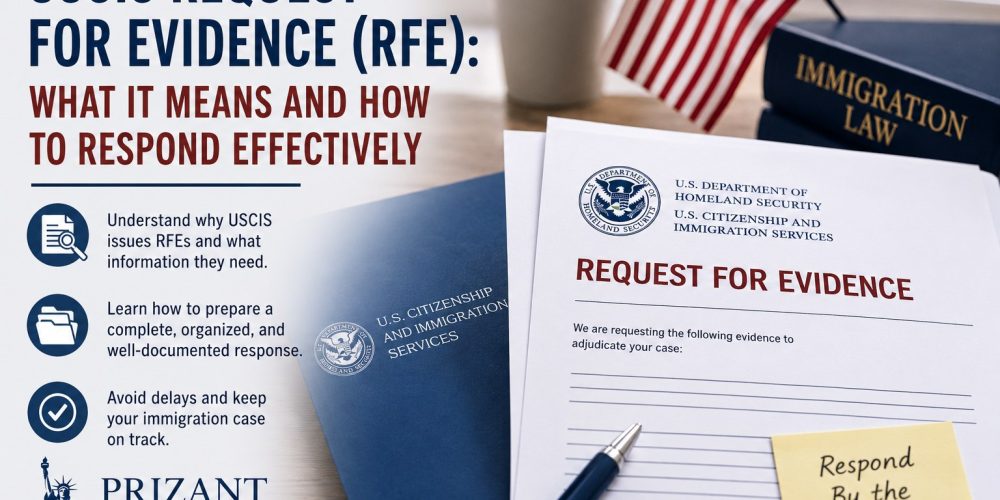
Request for Evidence (RFE): What It Means and How to Respond
Receiving a Request for Evidence (RFE) from U.S. Citizenship and Immigration Services (USCIS) can be stressful. Many applicants immediately assume that an RFE means their immigration case is about to be denied. Fortunately, that is usually not the case.
A Request for Evidence simply means that USCIS needs additional information before it can make a final decision on your application or petition. In many cases, applicants who submit a complete and well-prepared response go on to receive an approval.
The key is understanding why USCIS issued the RFE, gathering the right evidence, and responding before the deadline.
In this article, we’ll explain:
- What a USCIS Request for Evidence (RFE) is
- Why USCIS issues RFEs
- Common reasons applicants receive RFEs
- How to prepare a strong response
- Common mistakes to avoid
- When it may be beneficial to consult an immigration attorney
What Is a USCIS Request for Evidence (RFE)?
A Request for Evidence (RFE) is an official notice issued by USCIS requesting additional documentation or information before making a decision on your immigration case.
An RFE is not a denial.
Instead, it means the immigration officer reviewing your application believes that the evidence currently in the record is insufficient to approve the requested immigration benefit.
Depending on your case, the requested evidence may be relatively simple, such as a missing birth certificate or certified translation. In other situations, USCIS may request additional documentation to establish that you meet specific legal requirements. RFEs are commonly issued in Adjustment of Status cases, employment-based petitions, investor visas, and humanitarian applications. If you’re applying for a green card from within the United States, you may also find our Adjustment of Status Green Card Guide helpful.
Receiving an RFE gives you an opportunity to strengthen your case before USCIS reaches a final decision.
Why Does USCIS Issue an RFE?
USCIS may issue an RFE for many different reasons.
Some of the most common include:
- Missing birth, marriage, or divorce certificates
- Missing financial documents
- Insufficient evidence of a bona fide marriage
- Missing certified English translations
- Questions regarding employment history
- Missing or incomplete medical examinations
- Inconsistencies between forms and supporting documents
- Insufficient evidence establishing eligibility
- Missing affidavits or supporting statements
- Incomplete application forms
In many cases, USCIS simply needs additional evidence to verify information already provided.
Which Immigration Cases Commonly Receive RFEs?
Almost every type of immigration case can receive an RFE.
Some of the most common include:
- Marriage-Based Green Cards
- Adjustment of Status (Form I-485)
- Family-Based Immigration Petitions
- Removal of Conditions (Form I-751)
- Naturalization Applications
- Employment-Based Immigration
- H-1B Petitions
- EB-1 Petitions
- EB-2 National Interest Waiver (NIW) Petitions
- O-1 Extraordinary Ability Visas
- E-2 Treaty Investor Visas
- VAWA Self-Petitions
If your RFE relates to a VAWA case, you may also find our guide on How to Prove Abuse in a VAWA Case helpful. Likewise, applicants with investor visa questions can review our articles discussing E-2 visa investment requirements and common reasons E-2 visas are denied.
Does Receiving an RFE Mean My Case Will Be Denied?
No.
This is one of the biggest misconceptions about the immigration process.
An RFE simply means USCIS requires additional evidence before making a final decision.
Many immigration applications are approved after applicants submit a complete response addressing the officer’s concerns.
However, applicants should not ignore an RFE or assume that any response will be sufficient. The notice often provides valuable insight into how USCIS is evaluating the application.
Understanding those concerns is frequently just as important as gathering additional documents.
How to Respond to a USCIS RFE
Every RFE is different, but the following steps can help you prepare an effective response.
1. Read the Entire Notice Carefully
Before gathering documents, carefully read every page of the RFE.
The notice generally explains:
- What information USCIS needs
- Why additional evidence is required
- Which documents may satisfy the request
- Your response deadline
Do not guess what USCIS wants. Respond to the issues specifically identified in the notice.
2. Gather Relevant Evidence
Collect documentation that directly addresses the concerns raised by USCIS.
Depending on your case, this may include:
- Government-issued records
- Financial documents
- Employment records
- Medical records
- Affidavits
- Photographs
- Business records
- Educational credentials
- Relationship evidence
Submitting relevant evidence is generally more effective than submitting a large volume of unrelated documents.
3. Organize Your Response
A well-organized response makes it easier for the USCIS officer to review your evidence.
Many attorneys prepare a cover letter that:
- Lists each issue raised in the RFE
- Identifies the supporting exhibits
- Explains how each exhibit addresses USCIS’s concerns
A clear, organized response can help ensure important evidence is not overlooked.
4. Respond Before the Deadline
USCIS generally must receive your response by the deadline stated in the RFE.
Waiting until the last minute increases the risk of delays and missing documents.
Seven Common Mistakes to Avoid
Waiting Too Long
Some supporting documents take time to obtain. Begin preparing your response as soon as possible.
Ignoring Part of the RFE
Every request should be addressed.
Responding to only some of USCIS’s questions may result in a denial.
Sending Irrelevant Documents
Submitting hundreds of pages of unrelated material rarely improves a case.
Focus on quality rather than quantity.
Failing to Explain the Evidence
Supporting documents should clearly demonstrate how they satisfy the legal requirements identified by USCIS.
Ignoring Inconsistencies
If USCIS identified conflicting information, explain the discrepancy and provide supporting evidence whenever possible.
Forgetting Certified Translations
Documents written in a foreign language generally require a complete English translation that complies with USCIS requirements.
Missing the Deadline
Failure to submit a timely response may result in USCIS deciding the case based on the existing record.
Attorney Insight
One of the most common misconceptions is that an RFE simply means USCIS wants “more paperwork.”
That is rarely the real issue.
Most RFEs identify a specific concern that prevented the officer from approving the case based on the existing evidence. A strong response focuses on resolving that concern—not simply increasing the number of documents submitted.
In many cases, a well-organized explanation can be just as important as the supporting evidence itself.
Should You Hire an Immigration Attorney?
Not every RFE requires legal representation.
However, professional legal guidance may be appropriate if:
- USCIS questions your eligibility.
- The RFE raises complex legal issues.
- Your case involves an employment-based petition.
- USCIS alleges inconsistencies or possible misrepresentation.
- You previously received a denial.
- You are unsure how to respond.
An experienced immigration attorney can evaluate the RFE, identify potential weaknesses, organize the evidence, and develop a strategy tailored to your case.
Frequently Asked Questions
How long do I have to respond to an RFE?
Your deadline appears in the RFE notice. Carefully review the notice and make sure USCIS receives your response on time.
Can USCIS deny my case without issuing an RFE?
Yes. In some situations, USCIS may deny an application or petition without first issuing a Request for Evidence.
Can I submit more evidence than USCIS requested?
You may submit additional relevant evidence if it helps address the issues raised in the RFE. However, avoid overwhelming USCIS with documents that do not relate to the request.
What happens after USCIS receives my response?
USCIS will review the additional evidence and continue processing your case. Depending on the circumstances, USCIS may approve the application, request additional information if permitted, schedule an interview, or issue a denial.
Can I respond to an RFE without an attorney?
Yes. Many applicants respond on their own. However, if the RFE raises complex legal or factual issues, consulting an experienced immigration attorney may help you evaluate your options.
Final Thoughts
Receiving a USCIS Request for Evidence can feel overwhelming, but it is important to remember that an RFE is not a denial.
It is an opportunity to strengthen your application by providing the evidence USCIS needs to make a decision.
By carefully reviewing the notice, submitting a complete and organized response, and meeting the deadline, many applicants are able to move their immigration cases forward successfully.
If you have received a Request for Evidence and are unsure how to respond, the attorneys at Prizant Law can review your notice, explain your legal options, and help you prepare the strongest response possible.

